
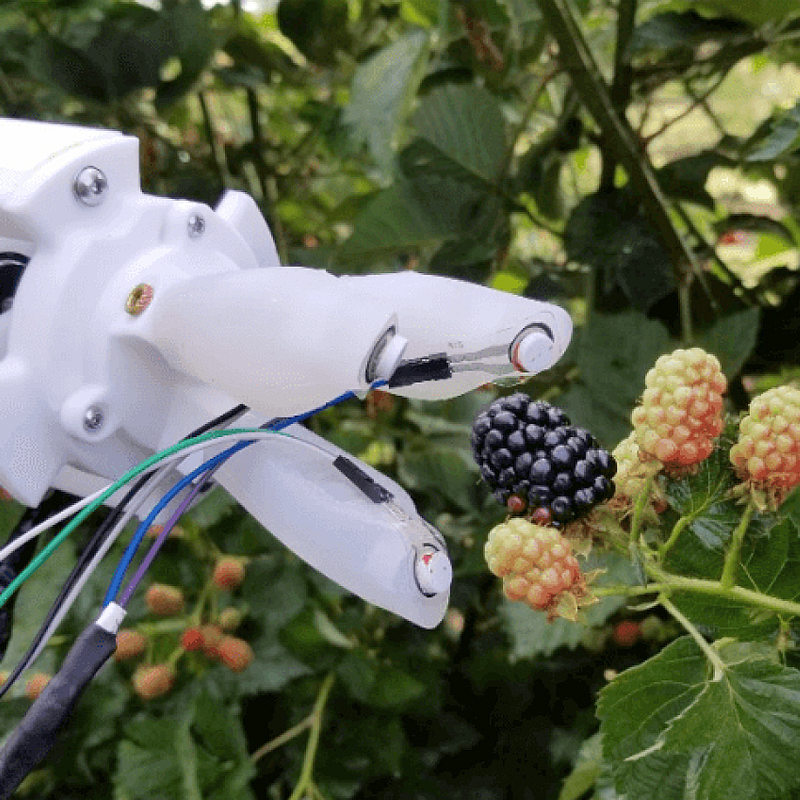
Field and Service Robots
Field and service robotic research focuses on creating robots capable of operating reliably in unpredictable, often unstructured and dynamic real-world environments beyond controlled lab settings. This research is crucial for enabling robots to perform tasks that are dull, dirty, and/or dangerous, improving safety and efficiency across industrial and military applications.
Field and Service Robotics Foundations
At Georgia Tech, we specialize in designing and deploying fully or partially autonomous mobile platforms, robotic arms, and mobile manipulation systems to address both simple and complex real-world challenges.
Field and service robot research aims to develop robots that can operate reliably in unstructured, unpredictable, and dynamic environments outside the controlled settings of labs. Unlike structured environments, unstructured settings lack predefined organization, fixed rules, or consistency, and often present significant variability and uncertainty. To succeed in these conditions, robots must sense and understand their surroundings, make real-time decisions, detect and recover from errors, and dynamically adapt to achieve their goals. This research is vital for advancing semi- and fully-autonomous systems capable of functioning in diverse and complex real-world scenarios.
Studying field and service robots is essential because most natural and real-world environments are unstructured. Without the ability to operate in unpredictable settings, robots remain constrained to carefully controlled environments, limiting their societal benefits. By overcoming these challenges, field and service robots can take on hazardous, repetitive, or labor-intensive tasks - improving safety, efficiency, and quality of life. For instance, autonomous robots can assist farmers in agricultural fields, aid search and rescue teams during disaster responses, support soldiers in combat scenarios, aid in supply chain and logistics operations or help elderly individuals live comfortably and independently in their lifelong homes. This research not only addresses pressing societal needs but also enhances productivity and safety across industries and communities.
At Georgia Tech’s Institute for Robotics and Intelligent Machines (IRIM), we are advancing field and service robotics by designing and deploying systems capable of achieving reliable outcomes in unpredictable environments. Our work includes developing autonomous mobile platforms, robotic arms, and mobile manipulation systems to tackle complex, real-world challenges. We focus on enabling robots to collaborate seamlessly with humans and function safely and effectively in dynamic, unstructured settings. Through the development and incorporation of state-of-the-art hardware, novel architectures, cutting-edge perception and control algorithms, and rigorous real-world testing, our innovations are bringing robots closer to integration into everyday life.
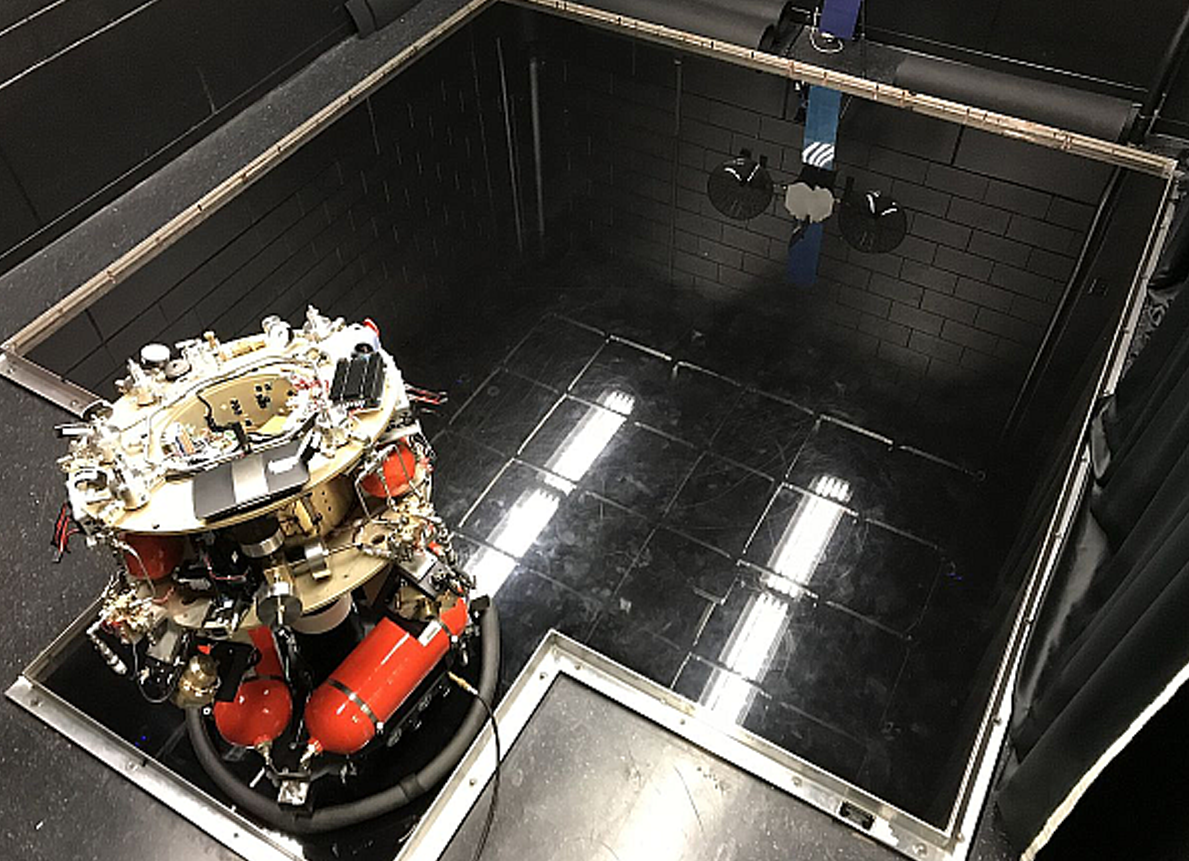
Aerospace
Aerospace robotics involves using robots or unmanned aerial vehicles (UAVs) to automate tasks across the aerospace industry, including maintenance, inspection, and flight testing. These UAVs are typically operated either directly by a ground-based controller or remotely through computer systems. In practice, aerospace robots support a wide range of functions, such as inspecting and maintaining aircraft and spacecraft, testing new flight prototypes, surveying and mapping remote or strategic areas for military purposes, assisting in disaster relief in hazardous or hard-to-reach environments, conducting search and rescue missions, and even contributing to air traffic control operations.
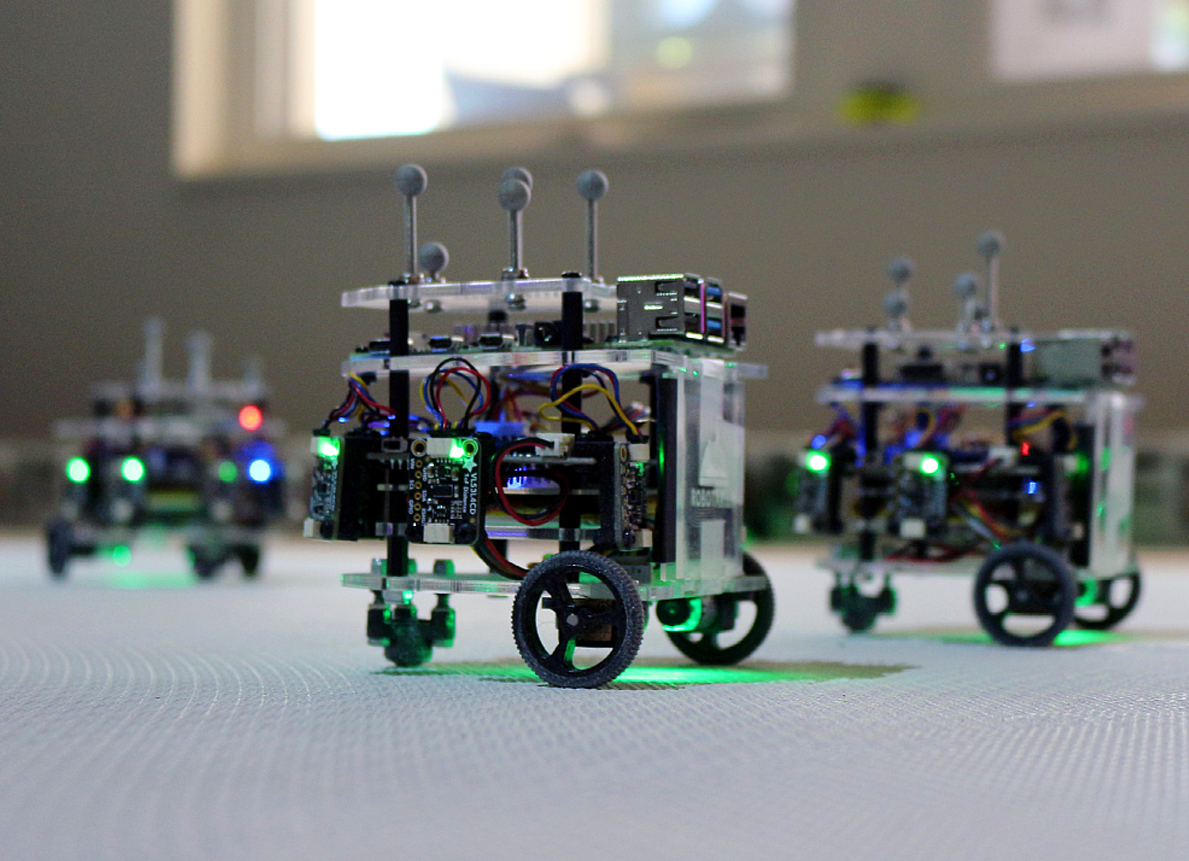
Muti-Agent Systems
Multi-agent robotic systems consist of multiple autonomous robots working together toward a shared goal. Each agent operates independently using its own sensors and programming, while coordinating and communicating with others to manage tasks and adapt to changing environments. This approach enables complex applications such as collaborative manufacturing, environmental monitoring, and swarm robotics, where coordinated group behavior emerges from individual interactions.
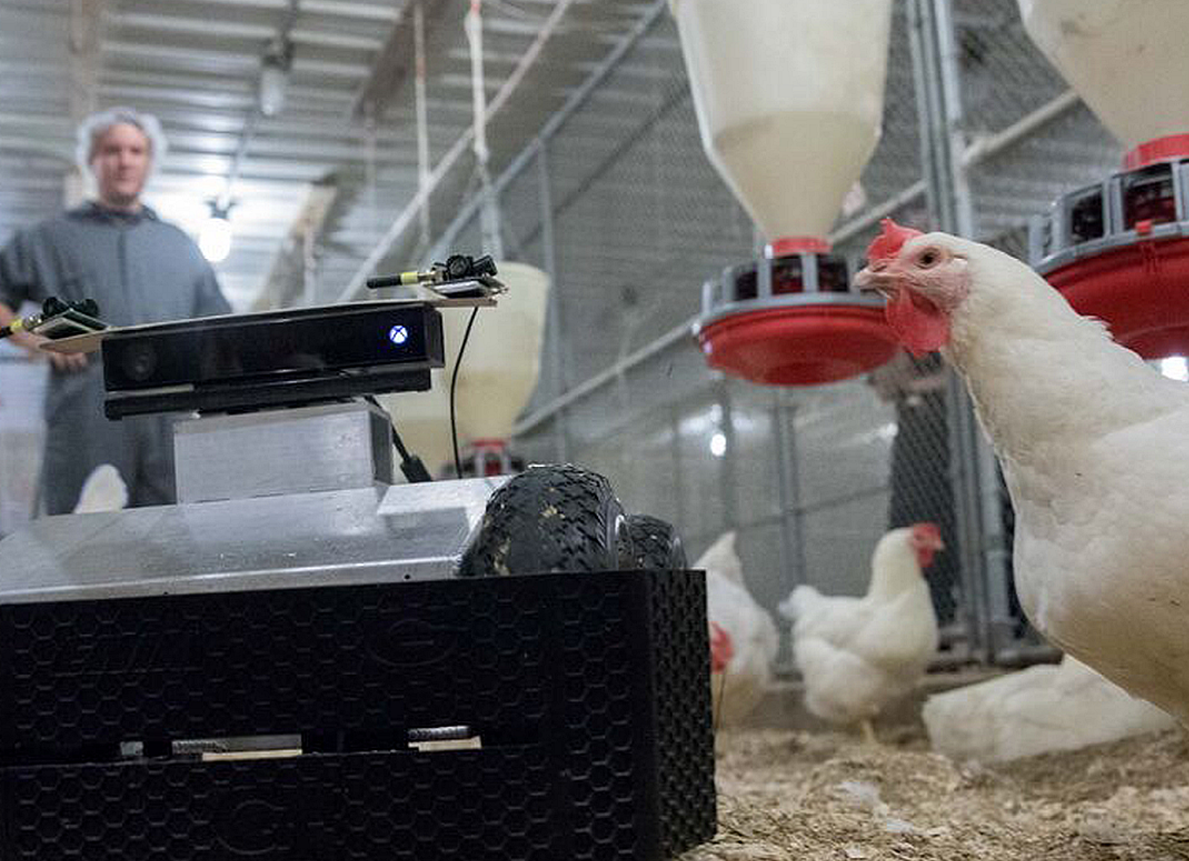
Agricultural Robotics
Outdoor agriculture relies heavily on mechanized systems, increasingly enhanced with intelligent robotics—machines that can automatically perform tasks by navigating environments, manipulating objects, and using sensors, actuators, and computational processing. These robotic systems support a range of operations, including precise seed sowing, transplanting crops from nurseries to fields, harvesting through cutting or selective picking of ripe produce, managing weeds and pests with targeted methods, and monitoring crop conditions using aerial or ground-based data collection.
Learn More
Contact for Field and Service Robotics | Sean Wilson - Collaborative Autonomy Branch Chief for the Aerospace, Transportation & Advanced Systems Laboratory at the Georgia Tech Research Institute (GTRI)