
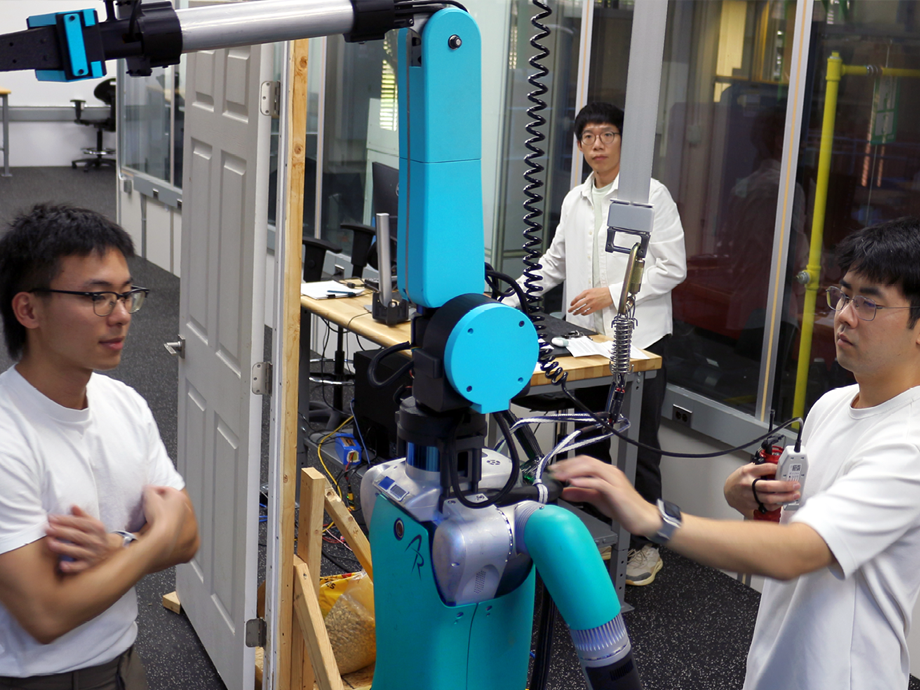
Manufacturing Zone
A shared user facility for the collaborative development and deployment of advanced Industrial Robotics systems centered on humanoid robotic platforms for industrial operations, including supply chain automation, material handling, assembly, welding, machining, additive manufacturing, inspection, and logistics. The facility provides specialized infrastructure such as humanoid-focused smart factory testbeds, robotic welding and machining cells, additive manufacturing platforms, automated warehousing environments, multimodal perception suites, and human–robot collaboration labs to address key technical challenges in industrial automation—including whole body dexterous manipulation, force-aware interaction, dynamic locomotion in complex workspaces, adaptive task planning, multi-agent coordination, and safe, efficient collaboration with cobots and human workers.
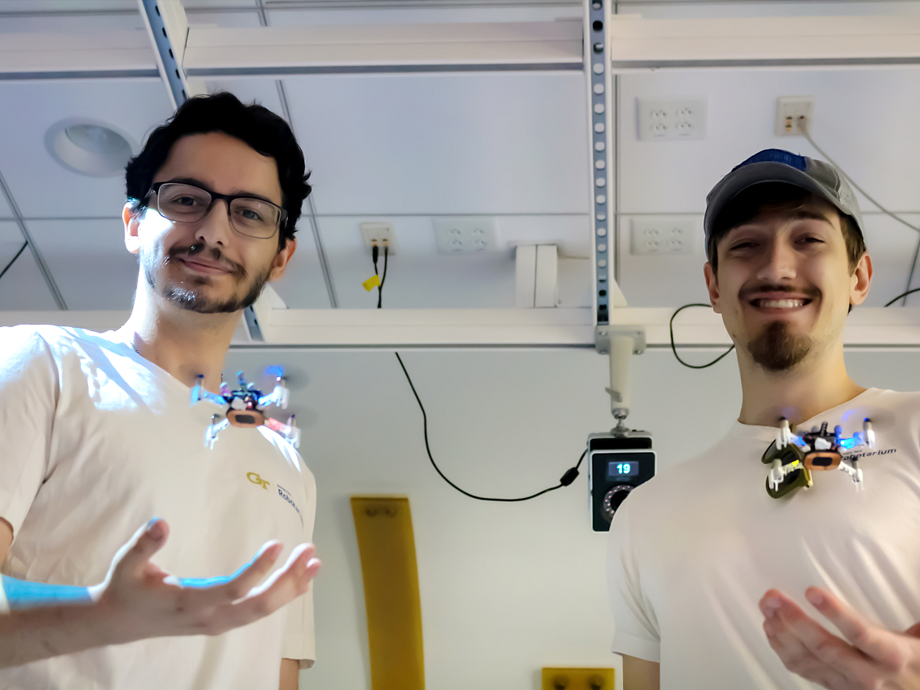
Flight Zone
The Georgia Tech Robotarium is a world-class research facility dedicated to advancing the science of multi-robot collaboration. As the world’s first remotely accessible swarm robotics research platform, it provides researchers across the globe with the ability to deploy algorithms on real robots at scale. This unique infrastructure supports experiments involving co-located and distributed robot teams, enabling researchers to study collaborative behaviors, real-time planning, and safe multi-robot interaction in dynamic environments. Equipped with state-of-the-art motion capture and scalable robot fleets, the Robotarium serves as both a premier testbed and an educational resource, fostering innovation in collaborative robotics and offering unprecedented access and reproducibility to the research community.
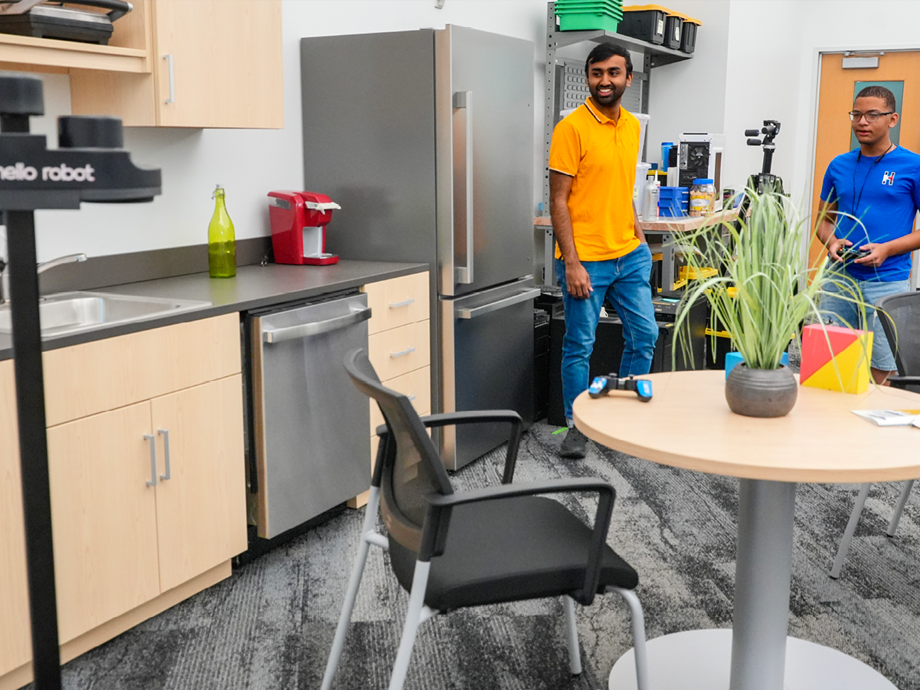
Household Robotics Zone
A shared user facility for collaborative development of robotic systems for everyday domestic tasks including cleaning, laundry, food preparation, object retrieval, mobility assistance, and caregiving, through the development of autonomous mobile manipulators, assistive robotic arms, soft robotic grippers, and human-centered service robots. The facility provides shared infrastructure such as instrumented mock homes and kitchens, embedded sensing environments, perception and motion-capture suites, and high-fidelity simulation platforms to tackle key technical challenges in unstructured home settings—including robust perception, dexterous manipulation of diverse objects, adaptive control, safe physical human–robot interaction, and long-horizon autonomy.
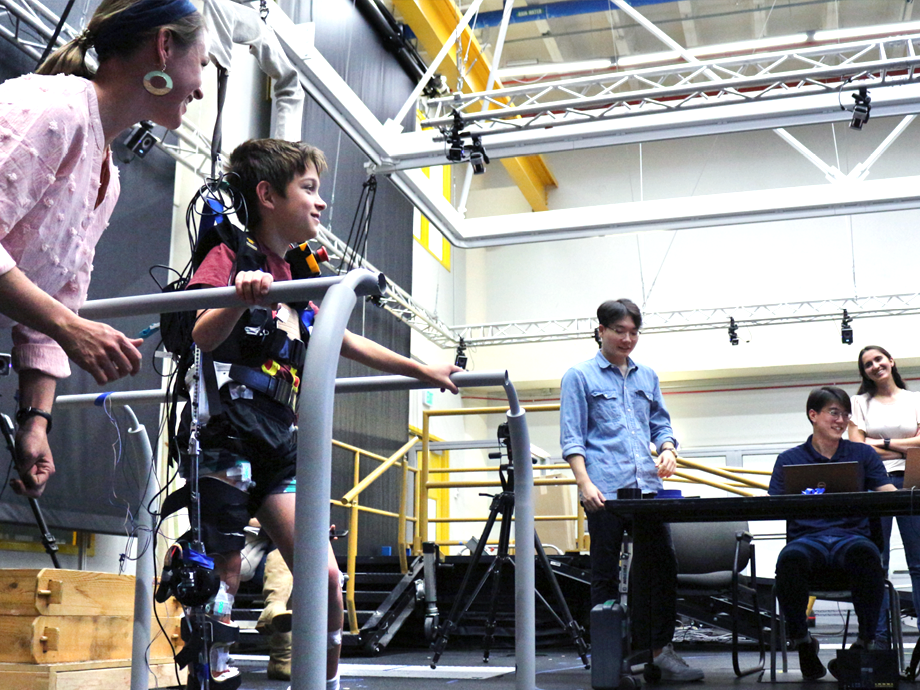
Human Augmentation & Mobility Zone
The Human Augmentation Core Facility at Georgia Tech is housed in a ~3,000 ft² space in the Callaway Building and is purpose-built for human-subject robotics research. It features two dedicated bays: a Motek CAREN system bay, which provides a 6-DOF motion platform, split-belt treadmill, force plates, and a surround-screen virtual environment; and a Gait Lab bay, equipped with multiple treadmills (including a high-speed treadmill), force-plate walking paths, a hydraulically adjustable terrain park with ramps and staircases, and a 32-camera Vicon motion-capture system.
Beyond its state-of-the-art instrumentation for human locomotion and biomechanics, the facility enables immersive studies where humans and robots co-exist and co-operate within complex, dynamic environments. This capability supports research into shared physical tasks, adaptive robot assistance, and safety-aware interaction control strategies that are fundamental to collaborative robotics.
Sustainable Construction Zone
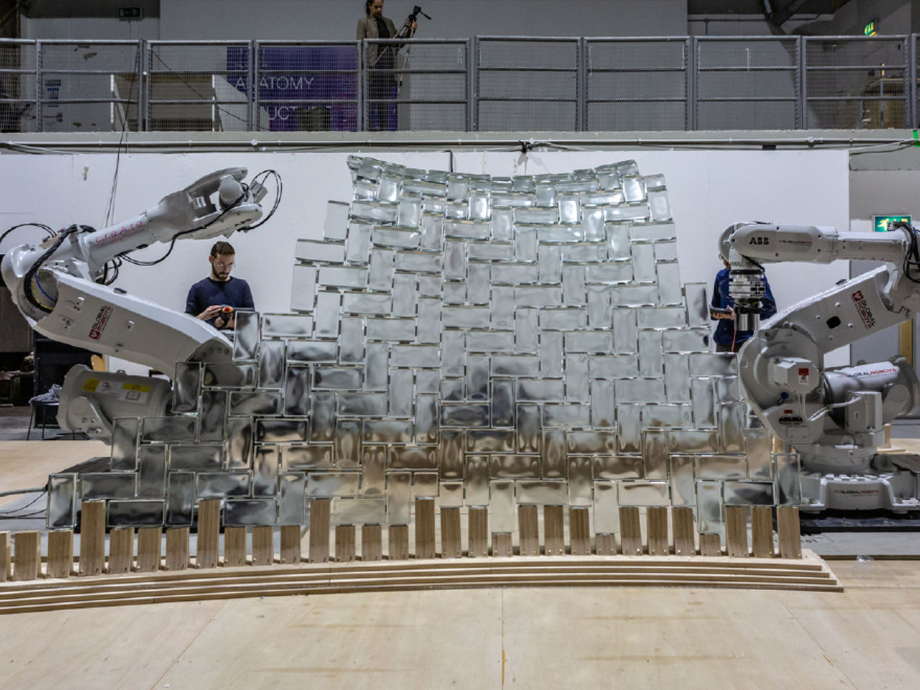
A shared user facility for the collaborative development and deployment of robotic systems for sustainable construction, focused on AI-driven robotic assembly of civil infrastructure and building systems, including modular fabrication, automated structural assembly, adaptive repair, and deconstruction for reuse. The facility provides specialized infrastructure such as large-scale fabrication bays, robotic gantries and mobile manipulators, digital twin environments, material characterization labs, and full-scale structural testbeds to address key technical challenges in autonomous construction—including multimaterial manipulation, precision assembly at scale, real time structural sensing, design-for-disassembly, lifecycle-aware planning, and the integration of sustainable practices from low-carbon materials selection through circular design and end-of-life reuse.