
Roadmapping Towards an Altruistic and Integrated Human-Robot Society
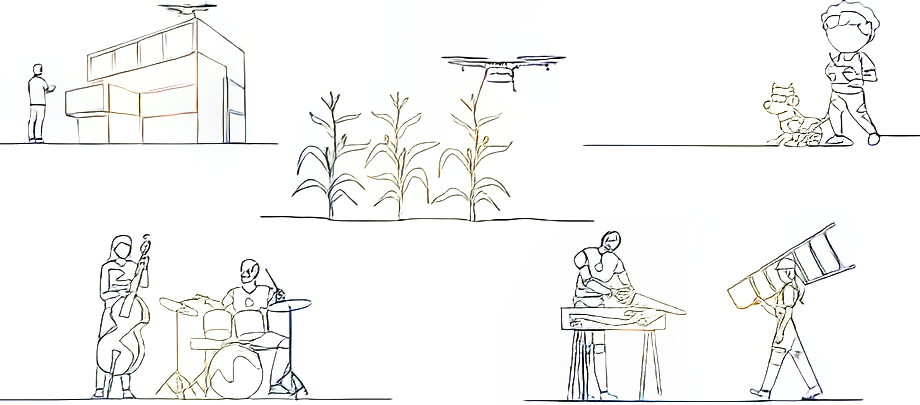 Nominate a Subject Matter Expert for a two-day Delphi Panel at Georgia Tech this fall to explore what robots and AI should be doing for society by the year 2125. We’re bringing together people from all walks of life — teachers, technologists, artists, healthcare workers, public safety professionals, and more — to imagine bold futures where tech meets everyday life.
Selected participants will receive a $500 honorarium, plus materials to help prepare for the conversation. We expect strong interest, so participation will depend on space, diversity of background, and alignment with the panel’s goals.
You can nominate yourself or someone else using this short form:
Why the Delphi Methodology?
The Delphi method is a structured, expert-driven approach for reaching informed consensus on complex, uncertain, or long-range questions. Originally developed at the RAND Corporation to support national defense and policy forecasting, the Delphi process has since been applied across fields like healthcare, business strategy, ethics, and emerging technology—where decisions must be made in the face of uncertainty and conflicting perspectives.
Unlike a traditional workshop or survey, the Delphi method unfolds over multiple rounds of anonymous input and structured feedback, allowing experts to refine their views in light of others’ insights – without the pressure of groupthink or hierarchy.
Human-Robot Society in 2125: Help Shape the Future Transcript
Please Expand for Full Transcript
In the moments that matter most, they won't just compute, they'll protect.
On the front lines of climate collapse, they'll help us heal what we nearly lost.
Where difference, once divided, play becomes a language we all speak.
They'll lift us, not to replace our strength, but to remind us that resilience is a shared act.
Even across rising waters, they'll carry hope on wings we built together.
Inside the body, deeper than hands can go. They'll do what once seemed impossible with precision, grace, and care.
In quiet moments, too, where dignity lives in daily acts, they'll be there.
They'll create with us. Not machines in the margins, but artists in the symphony of human expression.
And as we step beyond this world, they'll build beside us. Not as tools, but as teammates.
[Music]
This is not science fiction. It's the future of embodied intelligence. And the future cannot wait. Help us shape a society where humans and robots thrive together to live, work, and play.
Coming fall 2025.
Georgia Institute of Technology.